
Many people believe that financial success is primarily about saving more money. However, that’s not the case. It actually stems from spending wisely.
You can have a high income and still feel financially strained, while someone with a modest income can steadily accumulate wealth. The key difference is not often the amount of money you earn, but rather how your spending aligns with your life goals—or potentially undermines them.
This is where the 30% spending category plays a crucial, yet often misunderstood, role in personal finance. It’s not the category that leads to financial ruin; instead, it determines whether your financial plan endures long enough to be effective.
The Misunderstood Category That Controls Everything
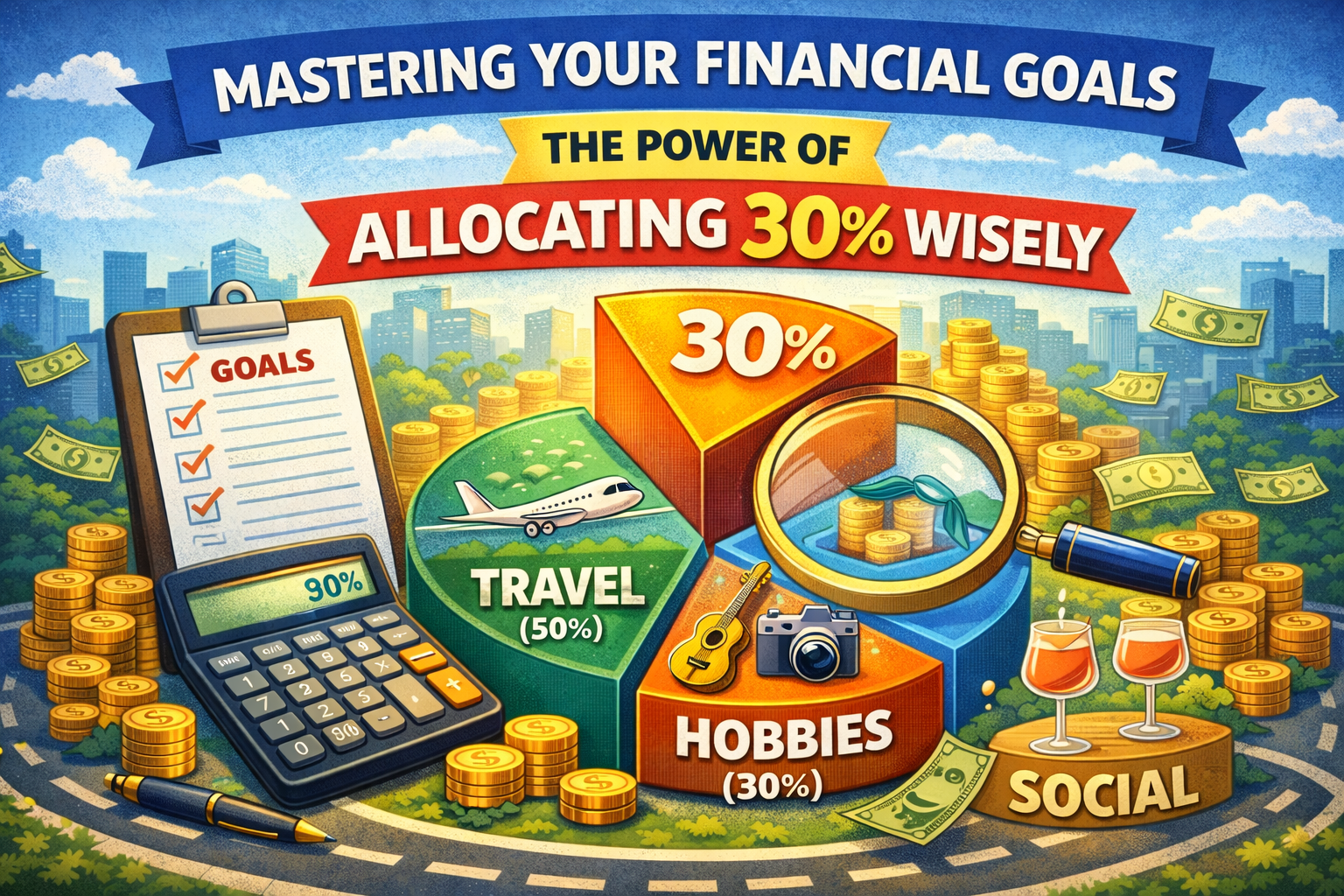
In structured money systems, roughly 30% of income is allocated to lifestyle spending — often labeled wants or guilt-free spending.
Most advice treats this category like a problem to minimize.
But behavior research shows the opposite:
Plans fail when they remove enjoyment.
Plans succeed when they make enjoyment sustainable.
The goal isn’t to eliminate discretionary spending.
The goal is to design it intentionally.
When used correctly, this 30% prevents:
-
burnout budgeting
-
binge spending cycles
-
emotional purchases
-
financial avoidance
In other words — this category stabilizes your entire financial system.
Why People Struggle With Money (It’s Not Math)
Many people overspend not due to a lack of knowledge, but because their money lacks a specific purpose.
So every purchase becomes a negotiation:
“Should I buy this?”
Repeated decisions lead to fatigue. Fatigue leads to impulse. Impulse undermines consistency. Allocating a fixed percentage completely removes the decision-making process. You shift from guessing to executing a structured plan.
The Hidden Goal of the 30% Category
This category is not for random spending; it is for priority spending. You intentionally allocate funds to the aspects of life that matter most, allowing you to stop subconsciously spending on things that don’t.
The true power lies in clarity: instead of spreading your spending thinly across many areas, you focus your resources on what you truly care about and limit spending elsewhere.
The Three Types of Spending (Only One Builds Happiness)
1) Default Spending (Dangerous)
This is where most money disappears:
-
unused subscriptions
-
convenience purchases
-
habit spending
-
boredom buying
It feels harmless because each purchase is small.
But collectively, it blocks financial progress.
2) Dopamine Spending (Temporary)
Impulse purchases triggered by mood:
-
late-night browsing
-
stress buying
-
reward shopping
Feels good briefly — then invisible.
3) Intentional Spending (Wealth Compatible)
This is the correct use of the 30%:
Spending that increases life satisfaction without increasing financial stress.
Examples:
-
travel
-
hobbies
-
social experiences
-
convenience that saves time
-
tools that increase productivity
This spending actually supports discipline instead of competing with it.
How to Design Your 30% Category Properly
Step 1 — Identify Your Top 3 Enjoyment Areas
Ask:
If money was already handled, what would I want more of in life?
Common answers:
-
time freedom
-
health
-
relationships
-
learning
-
experiences
Now your spending has direction.
Step 2 — Ruthlessly Eliminate the Bottom 50%
Eliminating what you don’t value is a transformative process that goes beyond mere financial savings; it’s about rediscovering and unlocking your true potential. When you take the time to assess what genuinely matters in your life, you begin to shift your focus away from excess and toward meaningful experiences and relationships.
By consciously deciding to let go of possessions, commitments, or even habits that don’t bring you joy or fulfillment, you create space for what truly resonates with you. This doesn’t just help you declutter your physical environment; it also liberates your mind and emotional energy, allowing you to pursue goals and passions that align with your core values.
This process of shifting satisfaction involves recognizing that fulfillment isn’t always tied to material wealth or external validation. Instead, it often stems from deeper connections, personal growth, and authentic experiences. As you prioritize what adds value to your life, you’ll find that you’re not just cutting expenses or downsizing; you’re making room for new opportunities, creativity, and a clearer understanding of what success and happiness mean to you.
In essence, this journey is about curating your life—intentionally choosing what you surround yourself with and focusing on what elevates your spirit. As you eliminate distractions and things that no longer serve you, you’ll unlock a sense of clarity and direction that propels you forward, helping you embrace a more fulfilling and purpose-driven existence.
Step 3 — Automate the Allowance
Move the monthly 30% into a dedicated spending account.
Now:
-
bills never compete with enjoyment
-
savings never feel restrictive
-
purchases become permission-based
Financial stress drops immediately because categories stop overlapping.
The Psychological Shift That Changes Everything
Without allocation:
Spending feels irresponsible
With allocation:
Spending becomes part of the plan
This single shift removes guilt — and guilt is the hidden driver of avoidance.
Avoidance causes people to ignore finances entirely.
Clarity causes engagement.
Example Monthly Breakdown
Take $4,500 take-home income:
| Category | Amount |
|---|---|
| Fixed costs | $2,250 |
| Lifestyle (30%) | $1,350 |
| Saving/investing | $900 |
Instead of wondering whether a $70 dinner is acceptable…
You already know:
Yes — because it came from the correct category.
Why This Accelerates Wealth Building
Paradoxically, structured spending increases saving.
Because consistency beats intensity.
People abandon strict budgets within weeks.
People follow sustainable systems for decades.
Wealth is the result of:
Small advantages × long time horizon
Not heroic short-term discipline.
Common Mistakes to Avoid
Mistake 1 — Treating 30% as leftover money
It must be planned, not accidental.
Mistake 2 — Funding wants after saving
Allocation happens before spending decisions.
Mistake 3 — Mixing categories
If lifestyle spending comes from bill money, stress begins.
Mistake 4 — Trying to optimize every purchase
Optimization creates friction.
Friction breaks systems.
The Long-Term Outcome
After several months, three changes occur:
-
Spending anxiety disappears
-
Saving becomes automatic
-
Financial awareness increases naturally
Not because you tried harder —
Because your structure stopped fighting your behavior.
Final Thought
Financial success is seldom about restriction. Instead, it’s about alignment. When your spending aligns with your goals, you won’t need to rely on discipline. When discipline is not needed, consistency naturally follows.
And it’s consistency — rather than intensity — that truly builds wealth. By mastering the 30% category, the rest of your financial plan will function more effectively.


Leave a Reply