
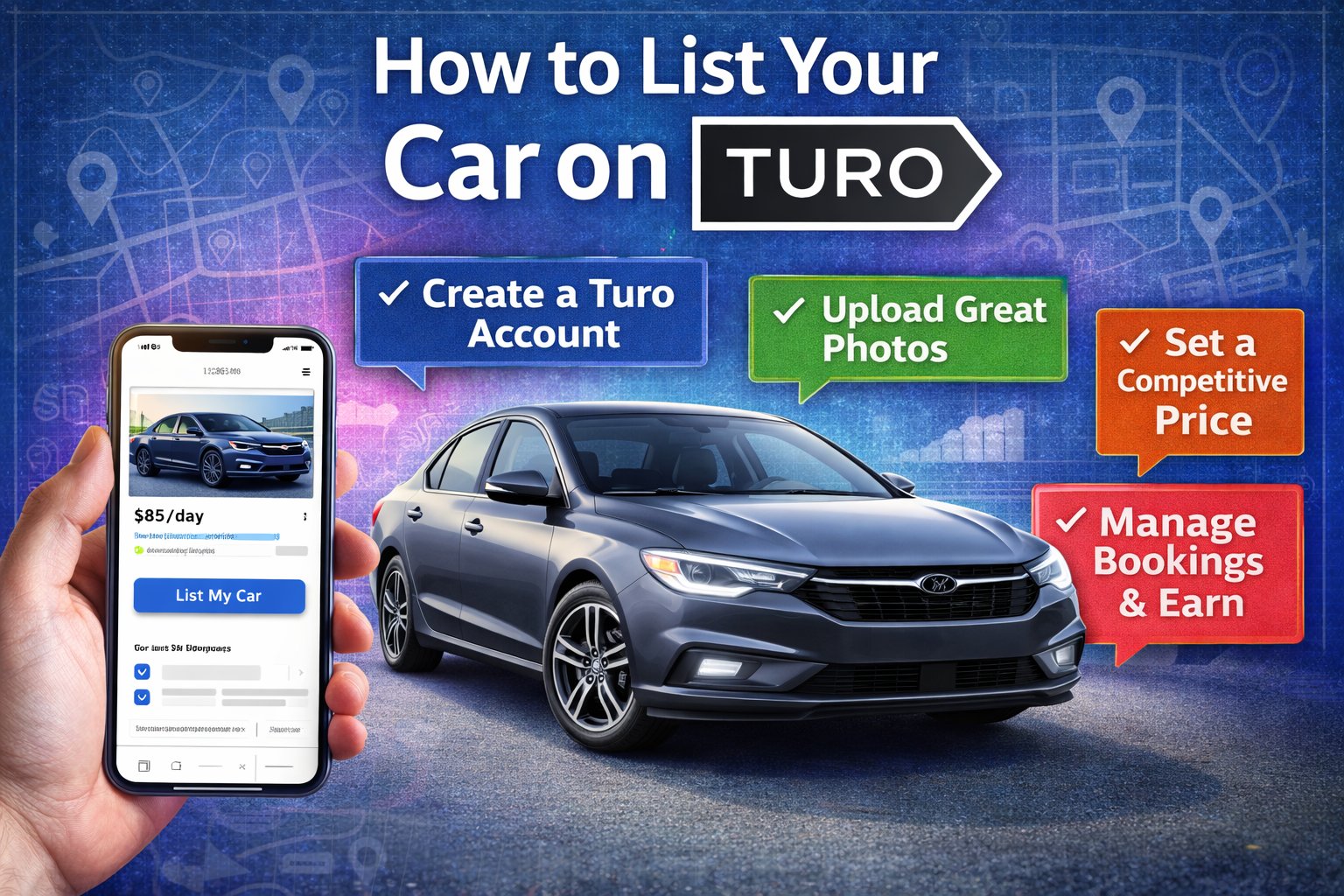
Turning your car into a cash-flowing asset is one of the most practical side hustles available today. If done correctly, listing your car on Turo can help offset car payments, insurance, maintenance, and even generate real monthly profit.
But here’s the truth:
Most first-time hosts leave money on the table because they treat it like a listing instead of a business.
This guide will show you exactly how to list your car on Turo, optimize it for bookings, protect your downside, and maximize earnings.
Step 1: Make Sure Your Car Qualifies
Before you create an account, confirm eligibility.
Generally, vehicles must:
-
Be 12 years old or newer (varies by market)
-
Have fewer than 130,000 miles
-
Have a clean title (no salvage/rebuilt)
-
Meet safety and insurance requirements
-
Be registered and insured in your name
Luxury, specialty, and electric vehicles may have additional requirements.
If your vehicle doesn’t qualify, consider upgrading strategically rather than guessing.
Step 2: Create a Turo Host Account
Sign up at Turo.com and create a host profile.
Your profile matters more than you think.
Use:
-
A professional photo
-
A clear, trustworthy bio
-
Quick response settings
-
Clear communication tone
Guests don’t just book cars — they book hosts.
Step 3: Choose the Right Protection Plan
Turo offers multiple protection plans for hosts. These typically differ in:
-
The percentage you keep
-
Deductible amount
-
Level of coverage
Higher protection = lower payout
Lower protection = higher payout but higher deductible
Choose based on:
-
Risk tolerance
-
Value of vehicle
-
Deductible comfort level
-
Cash reserves
Do not automatically select the highest payout plan if you cannot absorb deductible risk.
Step 4: Price Your Car Strategically
This is where most hosts get it wrong.
Do NOT simply accept Turo’s automatic pricing without review.
Instead:
-
Search your market
-
Compare:
-
Same make/model
-
Same year
-
Similar mileage
-
Similar ratings
-
-
Adjust based on:
-
Seasonality
-
Local events
-
Demand spikes
-
Pro Tip:
Price slightly below similar listings initially to build reviews, then increase gradually.
Your first 5–10 trips matter the most.
Step 5: Take Professional Photos
Photos drive bookings more than anything else.
Include:
-
Front ¾ angle
-
Rear ¾ angle
-
Interior dashboard
-
Seats (front and back)
-
Trunk space
-
Odometer
-
Close-ups of features
Shoot in:
-
Daylight
-
Clean environment
-
Neutral background
Bad photos = lower pricing power.
Step 6: Write a High-Converting Description
Your description should:
-
Highlight key features
-
Mention fuel efficiency
-
Mention safety features
-
Clarify the pickup process
-
Set expectations
Example structure:
• Who it’s perfect for
• Key features
• Fuel type
• Convenience details
• Delivery options
Clarity reduces disputes and improves reviews.
Step 7: Set Availability & Booking Preferences
Decide:
-
Minimum trip length
-
Advance notice requirement
-
Delivery radius
-
Pickup location
If you want higher utilization:
-
Enable instant booking
-
Reduce the minimum days
-
Offer local delivery
If you want higher control:
-
Require advance notice
-
Limit same-day booking
-
Screen manually
Choose based on your schedule.
Step 8: Prepare for Your First Booking
Before releasing the vehicle:
-
Wash and detail the car
-
Take timestamped photos (inside & out)
-
Record mileage
-
Record fuel level
-
Verify driver’s license through the app
-
Confirm protection plan coverage
Documentation protects you from damage claims.
Step 9: Deliver a 5-Star Experience
The first few trips determine your ranking.
Focus on:
-
Quick response time
-
Clean car
-
Clear instructions
-
Friendly tone
-
Simple pickup process
Five-star reviews increase:
-
Visibility
-
Pricing power
-
Booking frequency
Step 10: Optimize for Profit
Once you gain traction:
Increase revenue by:
-
Adding delivery fees
-
Adjusting weekend pricing
-
Raising the daily rate after reviews
-
Optimizing for 3–5 day rentals
-
Tracking utilization
Profit = Daily Rate × Utilization − Costs
Track:
-
Maintenance
-
Insurance
-
Depreciation
-
Cleaning
-
Turo fees
Treat it like a business, not a casual side hustle.
How Much Can You Earn on Turo?
Earnings depend on:
-
Vehicle type
-
Market demand
-
Seasonality
-
Host responsiveness
-
Reviews
Economy vehicles often earn steady bookings.
SUVs and specialty vehicles may earn higher per-trip.
Real profit depends on:
-
Smart pricing
-
High utilization
-
Cost control
Common Mistakes to Avoid
❌ Ignoring deductible risk
❌ Underpricing permanently
❌ Poor documentation
❌ Accepting every booking without screening
❌ Neglecting maintenance
❌ Mixing personal and rental use
Professionalism separates successful hosts from frustrated ones.
Should You List One Car or Build a Fleet?
Start with one.
Learn:
-
Market demand
-
Damage patterns
-
Booking behavior
-
Insurance exposure
-
Profit margins
Then scale strategically.
Many successful hosts treat their first vehicle as a testing ground before expanding.
Final Thoughts
Listing your car on Turo can be:
-
A way to offset a car payment
-
A serious side income
-
A scalable rental business
But success requires structure, documentation, pricing strategy, and discipline.
You are not just listing a vehicle.
You are launching a micro rental operation.
Operate accordingly.


Leave a Reply