
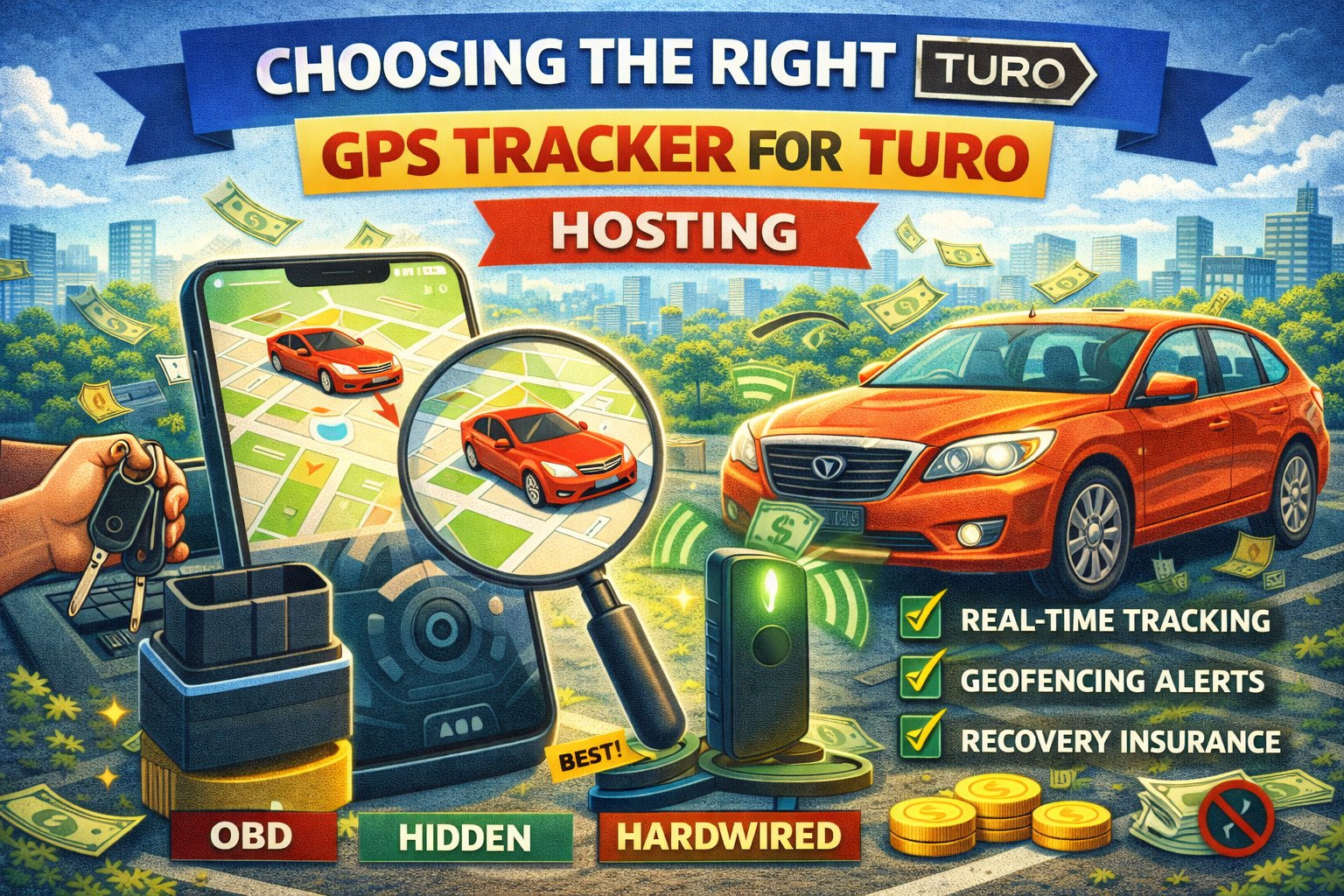
If you host on Turo for long enough, you will inevitably encounter a situation where a guest runs late, stops responding, and your car is not where it should be. At that moment, hosts typically experience one of two reactions: panic or reaching for their tracking app.
Having a GPS tracker is no longer optional for car-sharing; it has become a vital risk-management tool. It helps protect your revenue, reduces recovery time, simplifies insurance claims, and provides peace of mind.
This guide will help you choose the right tracker for your hosting strategy—not just the cheapest option.
First: Are GPS Trackers Allowed on Turo?
Yes, tracking devices are quite common in car-sharing.
Turo, for example, explicitly permits hosts to use tracking devices to protect their vehicles.
Major car-sharing platforms also allow monitoring equipment for theft prevention and vehicle management.
However, there are important considerations:
– Privacy regulations apply.
– Some devices require disclosure to users.
– Interior recording devices are subject to stricter regulations than GPS tracking.
The main takeaway is that using tracking devices is standard practice, while not using them could pose risks.
Why Every Serious Host Uses a Tracker
A tracker isn’t just about theft — it solves operational problems:
Operational Protection
-
Late returns
-
Unauthorized trips
-
Out-of-state driving
-
Abuse detection
Financial Protection
-
Faster claims processing
-
Proof for disputes
-
Insurance documentation
-
Recovery before total loss
Business Scaling
Fleet hosts rely on dashboards to monitor multiple cars simultaneously.
The 4 Types of GPS Trackers (And When To Use Each)
1) OBD Plug-In Trackers — Best for New Hosts
Plug directly into the diagnostic port.
Pros:
-
Easy install (10 seconds)
-
Trip history
-
Driving behavior
-
Low cost
Cons:
-
Guests can unplug
-
Visible
Best for: 1–3 cars, learning stage
Good examples


Why hosts like them:
They’re affordable and beginner friendly — the Bouncie also provides driving insights and diagnostics.
2) Battery-Powered Hidden Trackers — Best for Theft Protection
Hidden inside vehicle panels or trunk.
Pros:
-
Cannot be unplugged easily
-
Discreet
-
Theft recovery
Cons:
-
Must recharge
-
No engine diagnostics
Best for: higher-risk markets or long rentals
Good examples


Compact trackers like Spytec-style devices are popular because they provide frequent real-time updates.
3) Hardwired Trackers — Best for Professional Hosts
Installed into vehicle power system.
Pros:
-
Permanent
-
Tamper-resistant
-
Fleet management ready
Cons:
-
Install required
-
Higher upfront cost
Best for: multi-vehicle hosts
Fleet-grade trackers provide frequent location updates and analytics for business monitoring.
4) Passive / Low-Power Trackers — Not Recommended
Examples: Bluetooth tags
Why hosts avoid them:
-
Not real-time
-
Guests get alerts
-
Privacy complaints
Community experience shows these often cause renter disputes rather than protection.
The Features That Actually Matter
Don’t shop by brand — shop by function.
Must-Have Features
-
Real-time tracking
-
Geofencing alerts
-
Trip history
-
Speed alerts
-
Movement alerts
Basic trackers already provide these core alerts.
High-Value Features (For Scaling)
-
Multi-vehicle dashboard
-
Driving behavior scoring
-
Maintenance alerts
-
Remote immobilization (commercial setups)
These dramatically reduce management time as you grow.
How to Choose Based on Your Hosting Stage
| Hosting Level | Correct Tracker |
|---|---|
| First car | OBD plug-in |
| 2–5 cars | Hidden battery tracker |
| 5+ cars | Hardwired fleet tracker |
| Luxury vehicles | Dual tracker (OBD + hidden) |
Serious hosts often use two trackers:
One visible → deterrence
One hidden → recovery
The Most Important Strategy: Dual Tracking
Experienced hosts don’t rely on a single device.
They combine:
-
A visible OBD tracker (behavior monitoring)
-
A hidden tracker (recovery insurance)
If a guest removes one, you still have the location.
This is the difference between inconvenience and loss.
Installation Best Practices
Never mention exact tracker location.
Do not place in obvious glovebox areas.
Avoid constant battery drain locations.
And always test:
-
movement alerts
-
geofence alerts
-
late return alerts
Before the first booking.
The Real ROI of a Tracker
Many hosts think trackers are an expense.
They’re actually insurance deductibles prevention.
One prevented tow, missed return, or recovery often pays for the device for years.
Final Thought
In Turo hosting, the biggest risk isn’t accidents — it’s uncertainty.
A GPS tracker doesn’t just tell you where your car is.
It tells you whether your business is under control.
And once you remove uncertainty, hosting stops feeling stressful and starts feeling predictable — which is the real goal of any income-producing asset.


Leave a Reply