
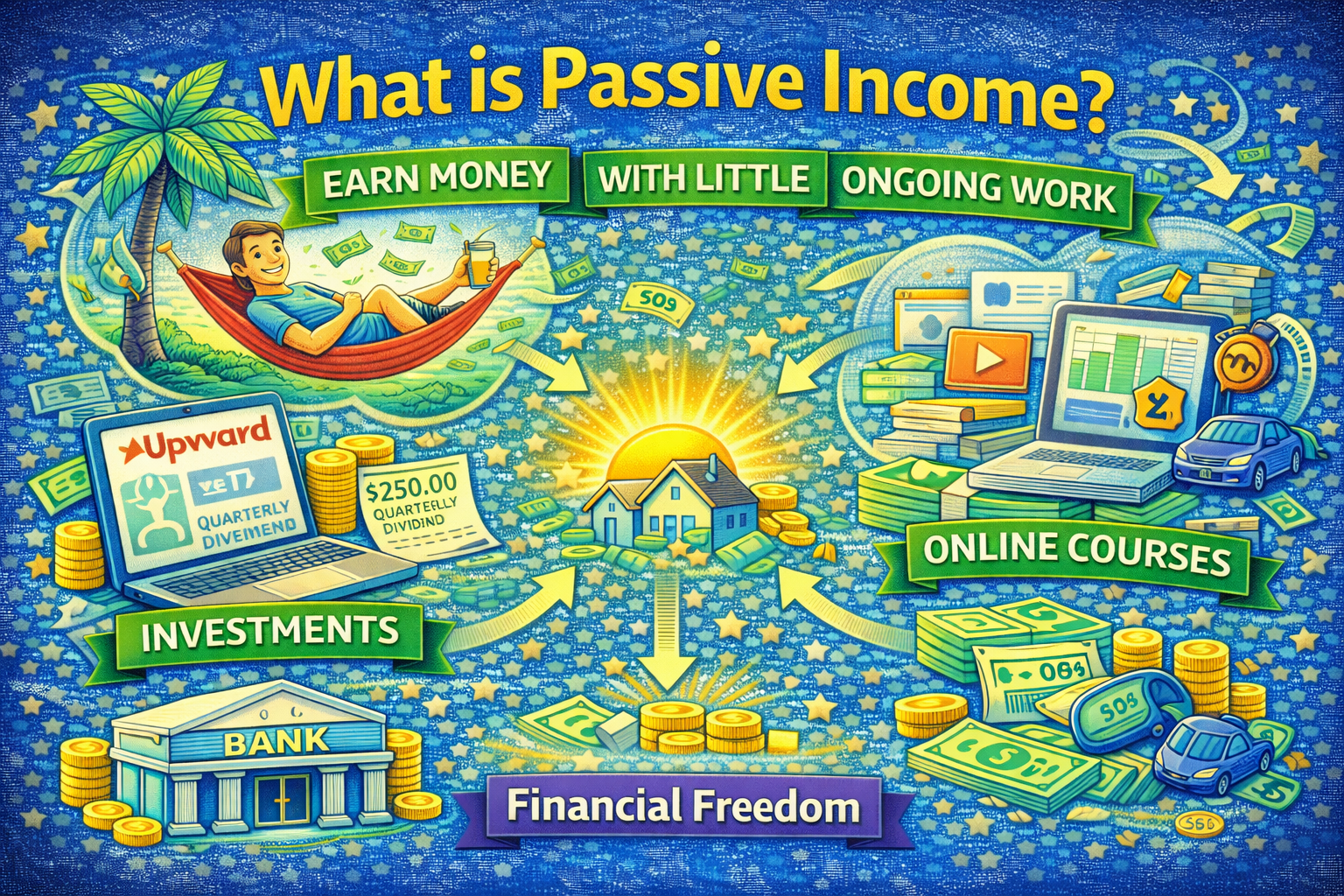
What is passive income, and why has it become such a buzzword in personal finance? Passive income is often described as the ultimate goal for anyone looking to build wealth, achieve financial independence, or reduce dependence on traditional employment. In this guide, we’ll break down what passive income truly means, how it works, and practical ways you can start creating your own passive income streams.
What is Passive Income?
Passive income refers to earnings generated with minimal ongoing effort. Unlike active income, which requires consistent labor (like a 9-to-5 job), passive income allows you to make money in the background. Whether it’s from investments, rental properties, royalties, or online businesses, passive income can help you accumulate wealth and build a financially secure future.
Why is Passive Income Important?
Passive income is essential for anyone pursuing financial freedom. By generating money that doesn’t require daily effort, you create more time for yourself and your loved ones, reduce financial stress, and even open opportunities to pursue your passions. Additionally, passive income is a powerful tool for building wealth over time. For example, a rental property or dividend-yielding stock can provide steady income while appreciating in value.
Types of Passive Income
Here are some of the most popular types of passive income that people use to supplement or replace traditional income sources:
-
Dividend Stocks
- Stocks that pay dividends allow investors to earn a share of a company’s profits. When you invest in these, you’re essentially being paid for holding the stock. Many people rely on dividends as a long-term wealth-building strategy.
-
Rental Income from Real Estate
- Real estate investment can generate passive income through rental payments. By purchasing property and renting it out, you can earn consistent monthly income. Rental income is a tried-and-true method for building wealth over time.
-
Peer-to-Peer Lending
- Peer-to-peer (P2P) lending platforms allow you to lend money to individuals or businesses, earning interest over time. Platforms like LendingClub and Prosper offer easy ways to start earning interest on your capital.
-
Royalties from Intellectual Property
- If you’ve written a book, produced music, or created digital content, you can earn royalties whenever someone uses or buys your work. This is especially common among artists, writers, and digital creators.
-
Online Businesses and Digital Products
- Creating an online business, selling digital products, or offering online courses can provide ongoing income with minimal maintenance. For instance, a successful online course or ebook can continue to generate revenue long after it’s published.
-
Affiliate Marketing
- Through affiliate marketing, you can earn a commission by promoting other companies’ products or services. With a blog, YouTube channel, or social media platform, affiliate marketing offers a flexible way to build passive income online.
-
High-Yield Savings Accounts and Bonds
- While not as high-yield as other options, high-yield savings accounts and government bonds provide safe and stable ways to earn interest with little risk.
How to Start Earning Passive Income
-
Evaluate Your Skills and Interests
- The best passive income strategies often align with your personal interests. For instance, if you enjoy writing, creating an ebook or blog could be ideal. If you’re interested in finance, dividend investing might appeal to you.
-
Choose Your Passive Income Source(s)
- Start small, and choose one or two income streams to begin. Experiment with these, and once you find success, you can expand into other areas.
-
Allocate Initial Time and Resources
- While passive income doesn’t require ongoing effort, the initial setup can be labor-intensive. For example, starting a blog or online business will require initial time and money before it becomes hands-off.
-
Reinvest Earnings
- Reinvesting your passive income can help you grow your earnings. For example, if you’re earning dividends, you could reinvest them to buy more shares, which increases future dividends.
-
Automate Where Possible
- Consider automating your income streams. Tools like robo-advisors for investment or property management companies for rental properties can make your passive income truly hands-off.
Pros and Cons of Passive Income
Pros:
- More Free Time: Allows you to earn money without active work.
- Wealth Building: Compounds over time, contributing to financial independence.
- Flexibility: Enables lifestyle freedom and choice.
Cons:
- Initial Effort: Requires upfront time, money, or both.
- Risk: Some income streams, like investments, carry financial risks.
- Maintenance: Although minimal, some income streams still need periodic attention.
Common Misconceptions About Passive Income
-
Myth #1: Passive Income is Truly Passive
- While passive income minimizes ongoing work, there’s almost always some initial effort or investment required. Completely “passive” income is rare and often unsustainable.
-
Myth #2: Passive Income Requires Little or No Money
- Some passive income sources, like investing in stocks or real estate, require significant initial capital. However, digital opportunities like affiliate marketing or digital products can be lower-cost alternatives.
Conclusion: Is Passive Income Right for You?
Passive income isn’t a one-size-fits-all solution, but it’s a powerful tool for those seeking financial freedom. With the right strategy and a bit of dedication, passive income can help you achieve your financial goals, reduce reliance on traditional work, and give you more time to focus on what matters most.
Ready to get started? Explore our guides on passive income ideas, investment tips, and automation tools to start your journey toward financial independence!


Leave a Reply