
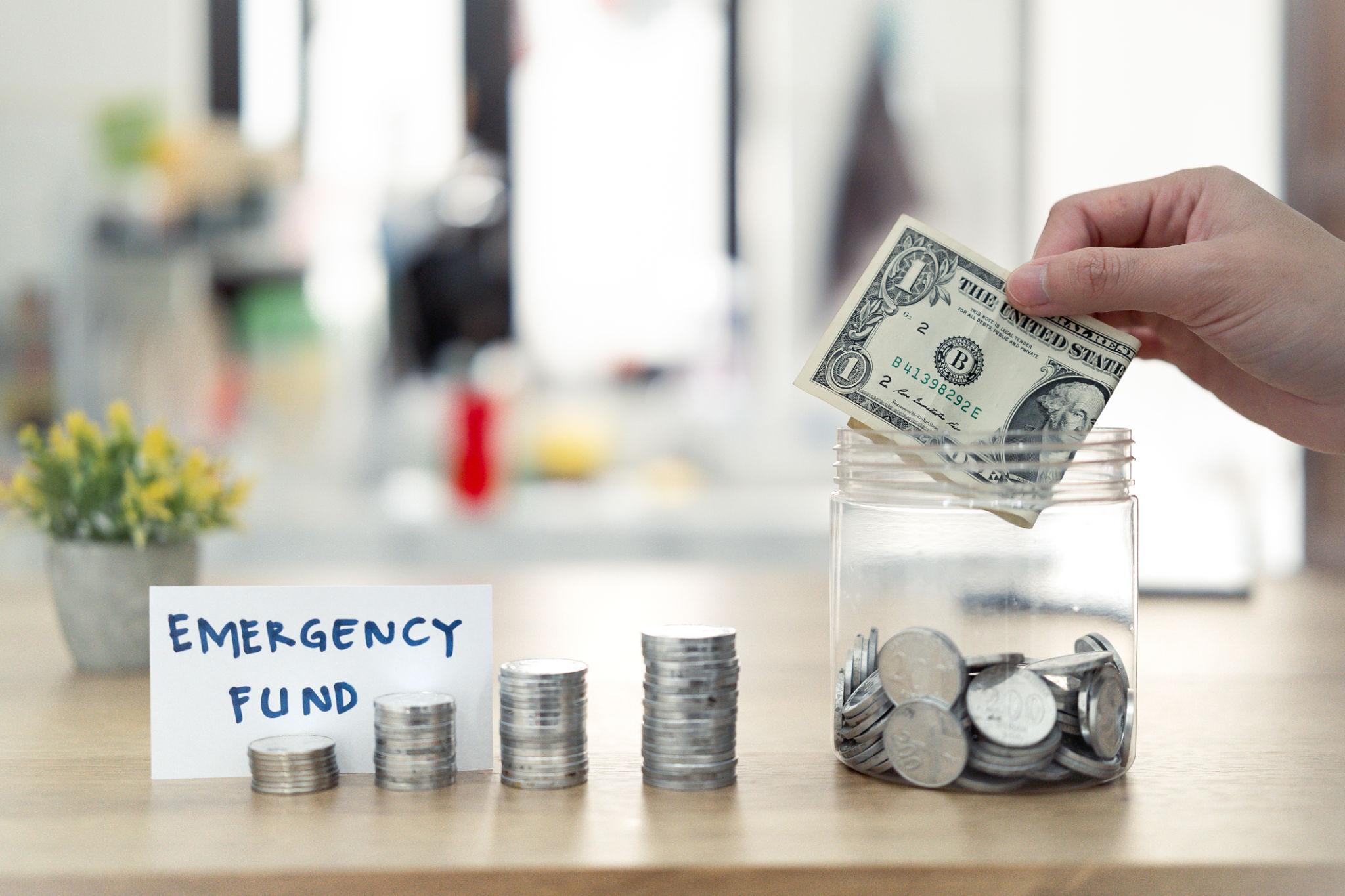
Financial resilience is not built when income rises.
It is built when instability no longer controls you.
An emergency fund is the first line of defense against:
-
Job disruption
-
Car repairs
-
Medical expenses
-
Unexpected bills
-
Income volatility
Before investing.
Before scaling a business.
Before taking financial risks.
You need protection.
This guide will show you:
-
Why $1,000 is the critical first milestone
-
How to calculate your real savings target
-
Behavioral strategies that actually work
-
A 30-day execution model
-
Automation systems that eliminate decision fatigue
-
Where to store your emergency fund safely
Let’s approach this strategically.
Why $1,000 Matters
$1,000 is not a complete safety net.
It is a stability anchor.
Research consistently shows that most households struggle to handle a $400–$1,000 emergency without borrowing.
That borrowing leads to:
-
Credit card interest
-
Emotional stress
-
Financial setbacks
A $1,000 buffer prevents small disruptions from becoming financial crises.
Step 1: Define What Counts as an Emergency
An emergency is:
-
Unexpected
-
Necessary
-
Urgent
It is NOT:
-
Vacations
-
Holiday shopping
-
Lifestyle upgrades
Without clear rules, emergency funds get drained.
Step 2: Calculate Your Minimum Stability Number
Before targeting 3–6 months of expenses, begin with:
$1,000 baseline emergency buffer.
Then calculate:
Monthly essential expenses (housing, utilities, food, insurance, transportation).
Example:
-
Rent: $1,800
-
Utilities: $300
-
Groceries: $600
-
Insurance: $400
-
Transportation: $500
Total essential = $3,600/month
Long-term goal = 3–6 months → $10,800–$21,600
But Phase 1 = $1,000.
Small wins create momentum.
Step 3: The 30-Day $1,000 Acceleration Plan
This requires intensity, not comfort.
Week 1: Immediate Cash Injection
Generate fast liquidity.
Options:
-
Sell unused electronics
-
Sell furniture
-
Freelance gigs
-
Overtime shifts
-
Refund audits
-
Cancel unused subscriptions
Target: $300–$500 in 7 days.
Speed builds motivation.
Week 2: Expense Compression
Audit spending.
Cut or pause:
-
Streaming services
-
Dining out
-
Non-essential shopping
-
Subscription stacking
If you cut $150/week for 4 weeks:
$600 saved.
Week 3: Income Optimization
Ask:
-
Can I negotiate bills?
-
Can I request a raise?
-
Can I pick up contract work?
-
Can I drive or deliver temporarily?
Even $200 extra accelerates timeline.
Week 4: System Lock-In
Automate transfers.
If paid biweekly:
Set $250 transfer per paycheck.
Emergency fund reaches $1,000 within 30 days.
Advanced Strategy: Behavioral Engineering
Saving fails when:
-
It relies on willpower
-
It competes with lifestyle
-
It requires constant decisions
Automation removes friction.
Method 1: Pay Yourself First
Schedule transfer immediately after payday.
Money disappears before spending begins.
Method 2: Separate Account Strategy
Do NOT store emergency funds in checking.
Use:
-
High-yield savings account
-
Separate bank
Physical separation reduces temptation.
Method 3: Threshold Transfers
If checking exceeds a set amount (e.g., $2,500), automatically sweep excess into savings.
Where to Store Your Emergency Fund
Your emergency fund must be:
-
Liquid
-
Safe
-
Accessible
-
Low risk
Do NOT place emergency funds in:
-
Stocks
-
Crypto
-
Volatile assets
Consider accounts tracking broad benchmarks like the S&P 500 only after your emergency buffer is complete.
Emergency funds prioritize safety over growth.
Financial Modeling: How Small Changes Build $1,000
Let’s break it down.
Scenario A: Income-Based Saving
Net monthly income: $4,500
Save 5%:
$225/month
Time to $1,000: 4.4 months
Scenario B: Combined Strategy
-
Sell items: $400
-
Cut expenses: $300
-
Side income: $300
Total in 30 days = $1,000+
Speed multiplies when actions stack.
The Risk Reduction Effect
Assume:
You experience a $900 car repair.
Without emergency fund:
-
Credit card at 24% interest
-
Minimum payments
-
Stress
With emergency fund:
-
Paid immediately
-
No interest
-
No disruption
Emergency savings reduce future financial drag.
After $1,000 — What’s Next?
Move to:
3–6 months essential expenses.
Use same framework:
-
Automate
-
Increase income
-
Maintain separation
-
Avoid lifestyle creep
Inflation and Purchasing Power
Inflation erodes cash.
If inflation averages 3%, holding excessive idle cash reduces real value.
Emergency funds should balance:
Liquidity + modest interest yield.
High-yield savings accounts help offset inflation slightly.
Common Mistakes
-
Investing emergency funds
-
Not defining “emergency”
-
Stopping at $1,000 permanently
-
Using credit as substitute
-
Keeping savings in checking
Psychological Impact of Financial Resilience
Money stress reduces decision quality.
Emergency funds increase:
-
Confidence
-
Risk tolerance in career
-
Negotiation strength
-
Long-term thinking
Resilience changes behavior.
Emergency Fund vs Investing
Order of operations:
-
Build $1,000 buffer
-
Pay high-interest debt
-
Expand emergency fund
-
Invest in index funds
-
Increase retirement contributions
Skipping steps increases fragility.
Real-World 60-Day Model
If income is tight:
Month 1:
-
$500 saved via cuts + side income
Month 2:
-
$500 via automation + reduced spending
Two months = full baseline protection.
Final Thought
Financial resilience is not built through complexity.
It is built through:
-
Clarity
-
Structure
-
Consistency
-
Automation
$1,000 will not make you wealthy.
But it will make you stable.
Stability allows wealth building.
Without resilience, growth collapses under pressure.
Build the base first.


Leave a Reply