
Most people open a savings account once… and never think about it again.
That mistake quietly costs thousands of dollars.
Today, the difference between a bad savings account and a good one can be 10 times the interest. Top accounts now pay around 4–5% APY while the national average savings rate is under 0.5%.
So the real question isn’t whether you should optimize your savings —
It’s about choosing the right account without falling for marketing traps.
This guide walks you through exactly how to evaluate and pick the best high-yield savings account step-by-step.
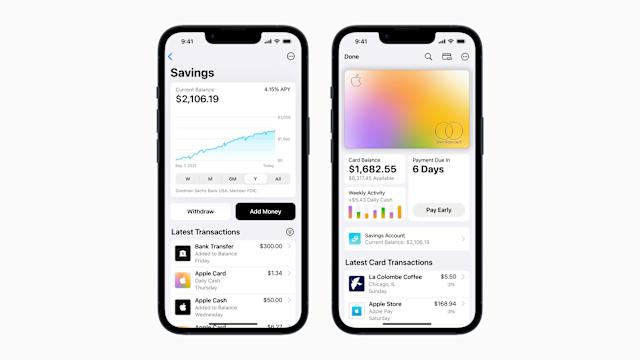
And if you want to see what a modern optimized cash account looks like in practice, I documented a real example here:
Step 1 — Understand What “High-Yield” Actually Means
A high-yield savings account is a deposit account that pays significantly more interest than traditional savings accounts.
Traditional banks:
-
large branch overhead
-
low competition pressure
Online banks:
-
lower operating costs
-
pass more interest to customers
That’s why high-yield accounts earn far more while keeping the same safety protections.
Important:
Your money is still a deposit — not an investment — so it does not fluctuate in value.
Step 2 — Check FDIC or NCUA Protection (Non-Negotiable)
Before comparing rates, confirm deposit insurance.
You want:
-
FDIC-insured banks)
-
NCUA insured (credit unions)
Coverage protects up to $250,000 per depositor per institution.
If an account lacks this protection → eliminate it immediately.
Some fintech apps advertise high rates but are actually brokerage cash sweeps without identical protections.
Step 3 — Compare APY (But Not Alone)
APY (Annual Percentage Yield) is the total yearly earnings after compounding.
Top savings accounts today reach around 4–5% APY.
But chasing the highest rate blindly is a common mistake.
Why?
Because fees can erase interest.
Example:
A 4.50% account with fees can earn less than a 4.00% account without fees.
You must calculate net return:
(interest earned − fees) ÷ balance
Step 4 — Eliminate Fee Traps
The best savings accounts usually charge zero monthly fees.
Watch for:
-
maintenance fees
-
minimum balance fees
-
inactivity fees
-
paper statement fees
-
early closure penalties
A “high rate” account with fees is often worse than a slightly lower free account.
Step 5 — Check Minimum Balance Rules
Some banks require minimum balances to:
-
earn interest
-
avoid fees
Failing this quickly turns a good account into a bad one.
The ideal account:
-
$0 minimum
-
full APY from dollar one
Step 6 — Evaluate Accessibility & Speed
A high-yield savings account must balance growth and usability.
Look for:
-
fast transfers
-
mobile app
-
external account linking
-
predictable withdrawal timing
Emergency funds must be accessible—not trapped.
I show how transfer behavior actually works in real use here
Step 7 — Understand Variable Rates
Savings APY changes with interest rates.
When central bank rates fall → savings rates fall.
When they rise → savings rates rise.
This is normal.
Avoid accounts that advertise permanent “locked” savings rates — that’s usually a different product, like a CD.
Step 8 — Choose the Right Account Type
Not all savings accounts serve the same purpose.
| Goal | Best Account |
|---|---|
| Emergency fund | High-yield savings |
| Daily spending | Checking |
| Automated saving | Cash management account |
| Locked returns | CD |
Trying to use one account for everything reduces effectiveness.
Step 9 — Use Behavioral Design (Most Important Step)
The best account is not just about math — it’s about behavior.
People save more when:
-
Money is separated
-
growth is visible
-
Transfers are automatic
The structure matters more than the rate.
Here’s a practical, real-world structure example
Common Mistakes to Avoid
1. Chasing promotional teaser rates
They often drop after a few months.
2. Keeping savings in checking
Visibility increases spending.
3. Opening too many accounts
Complexity reduces consistency.
4. Ignoring automation features
Automation beats discipline long-term.
Quick Checklist (Use This Before Opening)
Choose an account that has:
✔ FDIC/NCUA insurance
✔ No monthly fees
✔ No minimum balance
✔ Competitive APY
✔ Fast transfers
✔ Automation capability
✔ Simple interface
If it fails any of these, keep searching.
Final Thoughts
The best high-yield savings account isn’t the one with the highest advertised number.
It’s the one that:
-
protects your money
-
grows steadily
-
fits your behavior
-
removes friction from saving
When your system works automatically, saving stops being motivated.
And that’s when finances actually improve.
To see a real working example and walkthrough, read this full case study:


Leave a Reply