
When it comes to protecting your money, one question should always be at the top of your mind:
What happens if my bank fails?
While most people trust their financial institutions, history has shown that banks can and do fail. The good news is that the U.S. financial system includes safeguards designed to protect depositors.
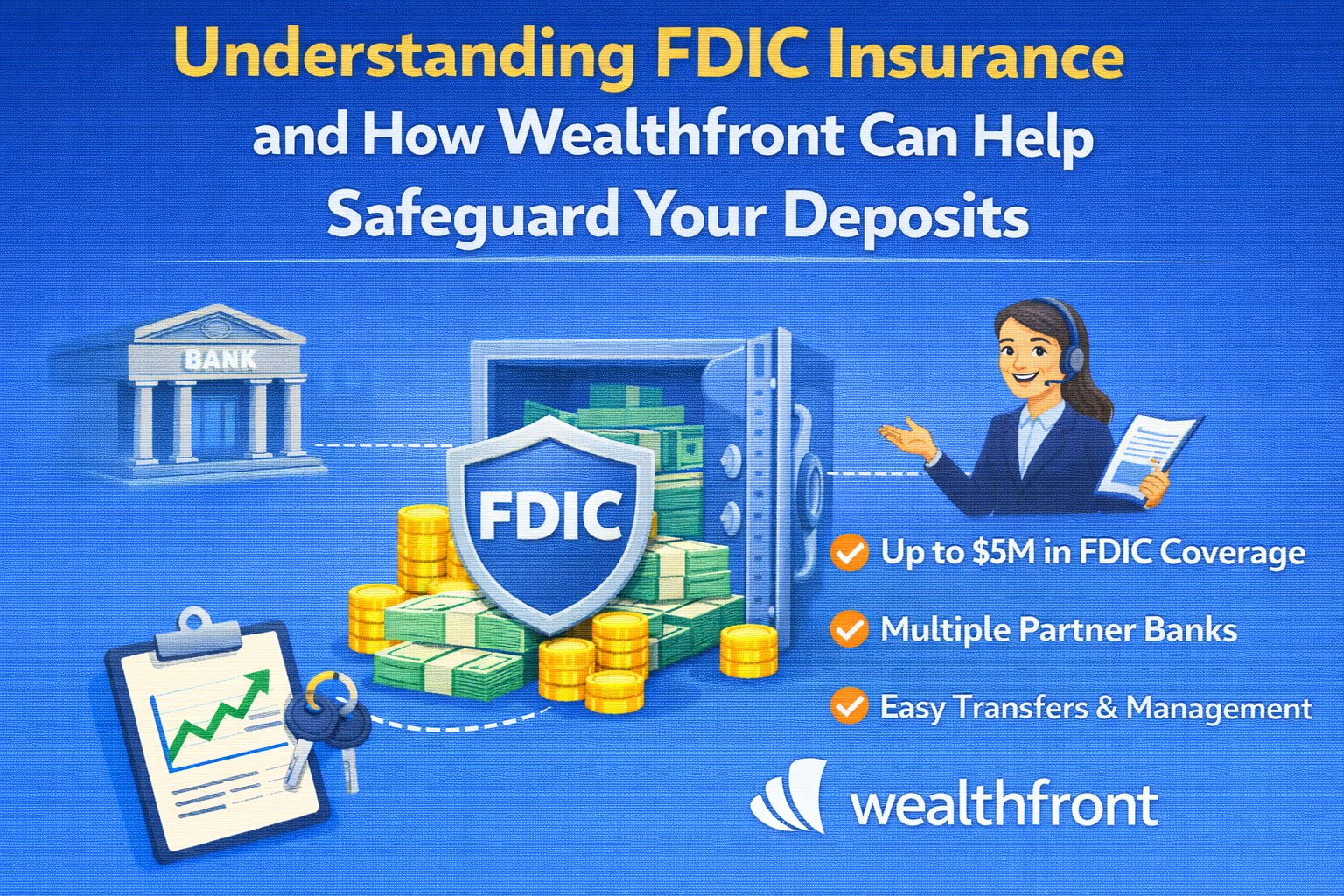
One of the most important protections available to consumers is FDIC insurance. Understanding how FDIC insurance works—and how modern financial platforms like Wealthfront structure their accounts—can help ensure that your savings remain safe even in uncertain economic times.
In this guide, we’ll break down how FDIC insurance works, what it covers, and how Wealthfront’s cash management structure helps maximize deposit protection.
What Is FDIC Insurance?
The Federal Deposit Insurance Corporation (FDIC) is an independent agency of the U.S. government created in 1933 during the Great Depression.
Its primary purpose is simple:
Protect depositors if a bank fails.
FDIC insurance guarantees that depositors will receive their insured funds even if a financial institution becomes insolvent.
Today, FDIC insurance covers up to:
$250,000 per depositor, per insured bank, per ownership category.
This protection applies to common deposit accounts such as:
-
checking accounts
-
savings accounts
-
money market deposit accounts
-
certificates of deposit (CDs)
If an FDIC-insured bank fails, depositors typically regain access to their insured funds within a few days.
Why FDIC Insurance Matters
While bank failures are relatively rare today, they still occur occasionally. When they do, FDIC insurance prevents depositors from losing their money.
Without deposit insurance, bank runs and financial panic could spread quickly.
FDIC insurance helps maintain confidence in the banking system by ensuring that everyday savers are protected.
For individuals building emergency funds or storing cash reserves, this protection is essential.
What FDIC Insurance Does Not Cover
It’s important to understand that FDIC insurance only applies to deposit accounts.
It does not cover investments such as:
-
stocks
-
bonds
-
mutual funds
-
cryptocurrencies
-
annuities
These investments carry market risk and are not protected by FDIC insurance.
For this reason, many financial advisors recommend keeping short-term savings and emergency funds in FDIC-insured accounts.
How Modern Cash Management Accounts Work
Traditional banks often offer low interest rates on savings accounts. As a result, many consumers have started exploring modern financial platforms that provide higher yields and additional features.
One such platform is Wealthfront.
Wealthfront offers a cash management account designed to combine the convenience of modern fintech tools with the safety of FDIC insurance.
How Wealthfront Protects Deposits
Wealthfront’s cash account works differently from traditional bank accounts.
Instead of holding deposits at a single bank, Wealthfront distributes funds across a network of partner banks.
This structure provides two important advantages:
1. Expanded FDIC Coverage
Because funds are spread across multiple partner banks, depositors may receive significantly higher FDIC protection limits than the standard $250,000.
This expanded coverage can help protect larger cash balances.
2. Risk Diversification
By distributing deposits across multiple financial institutions, Wealthfront reduces the risk associated with holding all funds in a single bank.
This multi-bank structure adds another layer of security for depositors.
Why Many Savers Use Cash Management Accounts
Cash management accounts have become popular because they combine several features into one financial tool.
Typical benefits include:
-
competitive interest rates
-
FDIC insurance protection
-
digital banking tools
-
automated savings features
For people managing emergency funds or saving for short-term goals, these accounts provide a convenient alternative to traditional savings accounts.
FDIC Insurance and Emergency Funds
Financial experts often recommend maintaining an emergency fund covering three to six months of expenses.
Because emergency funds must be accessible and secure, FDIC-insured accounts are often the best place to store this money.
Cash management accounts that provide both insurance protection and competitive interest rates can help savers preserve liquidity while still earning returns.
Understanding Ownership Categories
FDIC insurance limits apply per depositor and per ownership category.
Examples of ownership categories include:
-
individual accounts
-
joint accounts
-
retirement accounts
-
trust accounts
This structure means that families can often insure significantly more than $250,000 by properly structuring their accounts.
Understanding these categories allows savers to maximize FDIC protection.
Additional Safety Features Offered by Wealthfront
Beyond FDIC insurance, Wealthfront provides several tools designed to help customers manage their finances more efficiently.
These features include:
Automated Savings Tools
Wealthfront offers automation features that help users move money into savings or investment accounts based on rules and goals.
Financial Planning Tools
Users can access digital planning tools that help estimate retirement readiness, track savings goals, and monitor financial progress.
Investment Integration
Because Wealthfront also offers investment services, users can manage both their cash reserves and investment portfolios in one platform.
Is Your Money Safe in a Cash Management Account?
Safety ultimately depends on the structure of the account.
When evaluating financial platforms, consumers should confirm:
-
whether deposits are FDIC insured
-
which banks hold the funds
-
how coverage limits apply
In the case of Wealthfront, deposits are held at partner banks that provide FDIC insurance protection.
This means that even though Wealthfront itself is not a bank, your deposits remain insured through the partner banking institutions.
Who Should Consider Using Wealthfront?
Cash management platforms like Wealthfront can be particularly useful for:
-
individuals building emergency funds
-
savers seeking higher interest rates
-
investors who want integrated financial tools
-
professionals managing multiple accounts
By combining deposit protection with modern financial technology, platforms like Wealthfront offer a flexible alternative to traditional banking.
Final Thoughts
Protecting your savings should always be a top priority.
Understanding how FDIC insurance works provides valuable peace of mind when storing money in financial institutions.
By spreading deposits across partner banks and offering modern financial tools, Wealthfront provides a structure designed to safeguard customer deposits while helping users earn competitive returns.
For anyone building emergency funds, managing large cash balances, or simply seeking smarter ways to store savings, understanding FDIC insurance and modern cash management accounts is an important step toward financial security.


Leave a Reply