
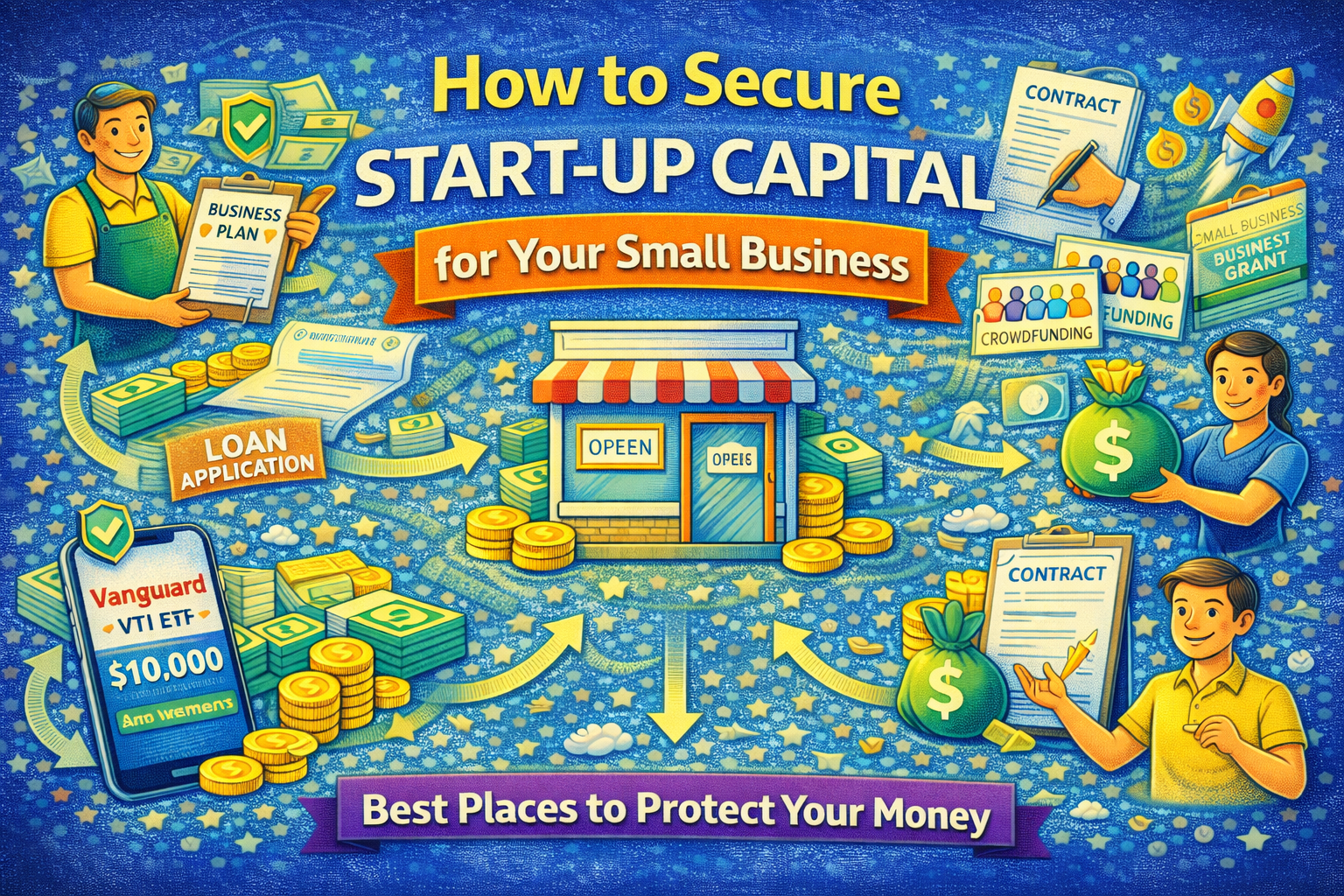
A practical blueprint for funding your idea without sabotaging your future.
Starting a business is exciting. Funding it is where reality hits.
Whether you’re launching a local service business, an online brand, or a scalable startup, capital determines how fast you move — and how much risk you carry. The wrong funding decision can suffocate a good idea. The right one can accelerate it.
This guide breaks down how to secure start-up capital for your small business, step by step, with strategies that protect your cash flow and position you for long-term growth.
Step 1: Know Exactly How Much You Need (Not What You “Want”)
Before approaching any lender or investor, calculate:
-
Startup costs (licenses, equipment, website, legal fees)
-
3–6 months of operating expenses
-
Marketing budget
-
Insurance
-
Working capital cushion
Most founders underestimate working capital. Businesses rarely fail because the idea is bad — they fail because they run out of cash.
Action step: Create a lean startup budget. Separate:
-
Essential costs
-
Nice-to-have upgrades
-
Growth capital
Investors fund clarity. Lenders fund predictability.
Step 2: Start With Bootstrapping (Your First Layer of Capital)
Bootstrapping means funding your business yourself.
Sources include:
-
Personal savings
-
Side hustle income
-
Tax refunds
-
Selling unused assets
-
Freelance income
-
Pre-selling your product or service
Why this matters:
Bootstrapping:
-
Preserves ownership
-
Forces discipline
-
Reduces early risk
-
Increases investor confidence later
Many successful businesses begin lean and grow organically. If you can validate demand before borrowing, you dramatically reduce financial pressure.
Step 3: Small Business Loans (Debt Capital)
If bootstrapping isn’t enough, debt is usually the next step.
1. SBA Loans
The U.S. Small Business Administration (SBA) guarantees loans through banks. These loans often offer:
-
Lower interest rates
-
Longer repayment terms
-
Structured underwriting
Common types:
-
SBA 7(a) loans
-
SBA microloans
-
SBA 504 loans (for equipment or real estate)
SBA loans require:
-
A solid business plan
-
Personal credit review
-
Financial projections
-
Sometimes collateral
Best for: Businesses with strong plans and moderate capital needs.
2. Traditional Bank Loans
Banks look at:
-
Credit score
-
Debt-to-income ratio
-
Collateral
-
Business viability
They’re more conservative than online lenders but may offer better rates.
3. Online Business Lenders
Faster approval, but:
-
Higher interest rates
-
Shorter repayment periods
Best used strategically—not as your primary funding source.
Step 4: Grants (Non-Dilutive Capital)
Grants are ideal because they don’t require repayment.
Sources include:
-
Federal and state programs
-
Minority-owned business grants
-
Women-owned business grants
-
Local economic development programs
-
Private corporate grants
However:
-
Grants are competitive
-
They require time and paperwork
-
Approval is not guaranteed
Grants work best as supplemental capital—not your sole funding source.
Step 5: Angel Investors (Equity Capital)
Angel investors invest personal funds in exchange for ownership.
They typically invest:
-
$10,000–$250,000
-
In early-stage businesses
-
With high growth potential
Pros:
-
No loan payments
-
Mentorship
-
Network access
Cons:
-
You give up equity
-
You lose some control
-
Investors expect returns
Pursue equity investors only if your business model supports scaling.
Step 6: Venture Capital (For High-Growth Models)
Venture capital is for businesses that can scale rapidly.
VC firms look for:
-
Massive market potential
-
Technology or innovation edge
-
Aggressive growth strategy
VC funding is not ideal for:
-
Lifestyle businesses
-
Local service companies
-
Moderate growth operations
Unless you’re building something scalable nationwide or globally, VC may not be the right path.
Step 7: Crowdfunding
Platforms allow you to raise capital from many small contributors.
Types:
-
Reward-based crowdfunding
-
Equity crowdfunding
-
Donation-based funding
Crowdfunding works best when:
-
You have a strong community
-
Your product is innovative
-
You can tell a compelling story
Marketing determines crowdfunding success.
Step 8: Business Credit (Smart Leverage Strategy)
Business credit can provide:
-
Credit cards
-
Vendor lines
-
Short-term working capital
However:
-
Interest rates are high
-
Misuse can damage credit
-
Cash flow discipline is required
Use business credit as a tool — not a crutch.
Step 9: Pre-Sell to Fund Growth
One of the most overlooked strategies:
Pre-sell your product or service.
Examples:
-
Take deposits before ordering inventory
-
Offer early-bird pricing
-
Secure contracts before expansion
This method:
-
Validates demand
-
Generates cash upfront
-
Reduces borrowing needs
Revenue is the best capital.
Step 10: Combine Funding Strategically
Smart founders often layer capital sources:
Example:
-
$10,000 personal savings
-
$15,000 SBA microloan
-
$5,000 pre-sales
-
$3,000 grant
Total: $33,000 without excessive debt or equity loss.
Blended capital structures reduce risk.
How to Increase Your Chances of Approval
No matter the funding source, you’ll need:
1. A Strong Business Plan
Include:
-
Executive summary
-
Market analysis
-
Competitive landscape
-
Revenue model
-
Expense projections
-
Break-even analysis
2. Financial Projections
Show:
-
12-month forecast
-
Cash flow analysis
-
Profit & loss estimate
-
Funding use breakdown
3. Good Credit
Improve your personal credit score before applying.
4. Clear Use of Funds
Lenders and investors want to know:
-
Exactly how the money will be used
-
How it generates revenue
-
How it gets repaid
Clarity builds confidence.
Common Mistakes to Avoid
❌ Borrowing more than you need
❌ Funding lifestyle instead of operations
❌ Ignoring cash flow timing
❌ Mixing personal and business finances
❌ Giving away too much equity too early
❌ Relying solely on high-interest debt
Capital should accelerate growth — not suffocate it.
Final Thoughts: Funding Is Strategy, Not Just Money
Securing start-up capital isn’t about chasing the biggest check. It’s about building a funding structure that:
-
Preserves flexibility
-
Protects ownership
-
Supports growth
-
Minimizes unnecessary risk
Start lean. Validate demand. Protect cash flow. Use capital as fuel — not life support.
The best entrepreneurs don’t just raise money.
They raise money intelligently.


Leave a Reply